For a camp or youth program, the best field trips do more than fill a few hours.
They give students something to talk about on the way home. They get them moving. They make them cooperate, laugh, problem-solve, and share an experience that feels different from the rest of the week.
That is what we build at Tidal Force: a group VR experience that feels exciting for students and manageable for the adults planning it. Two hours, free-roam, multiplayer — every experience team-based by design.
We've been running group sessions at Tidal Force for years. About half the time the group is a summer camp; the rest is a mix of schools, youth programs, college bridge cohorts, and the occasional birthday. This post is a walkthrough — what a typical visit looks like, what we've learned about running it well, and how to figure out whether it would be a fit for the group you're planning.
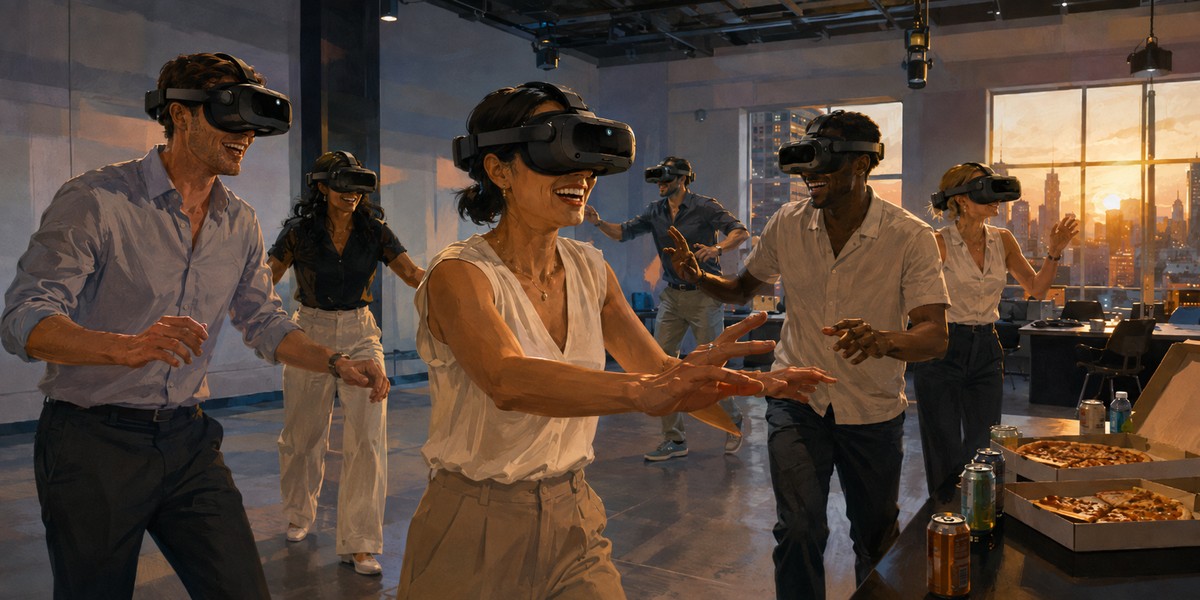
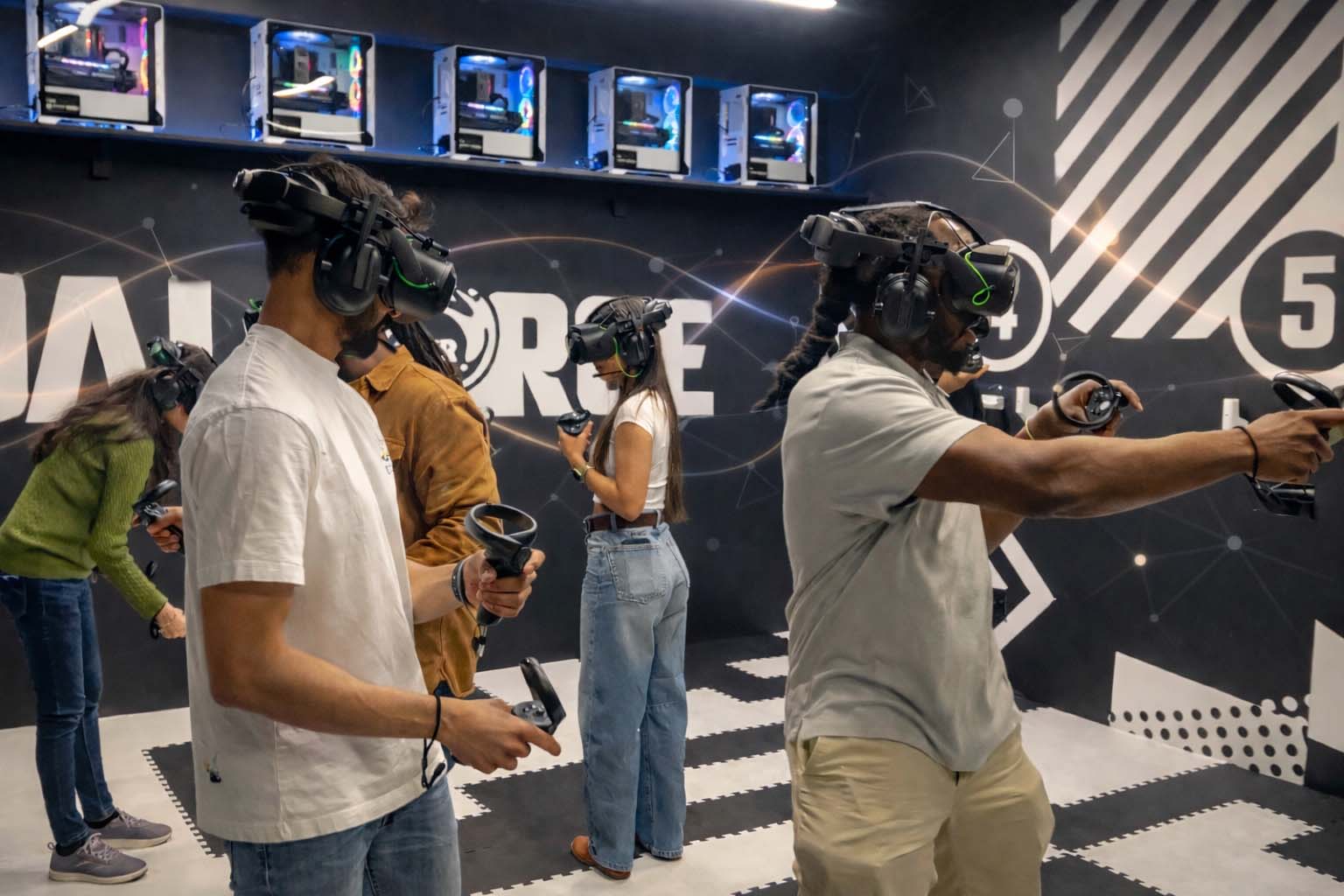
At Tidal Force, VR is something a group does together, in person. A Tidal Force experience is a shared adventure that students step into together. Your students walk into a real room, put on wireless headsets, and step into a new world as a crew — moving around the same space, seeing each other as characters, working through the experience side by side.
They are not sitting alone in separate headsets, playing by themselves, or connecting online from different places. They are in the same room, moving through the same world, hearing each other, talking to each other, and working as a team.
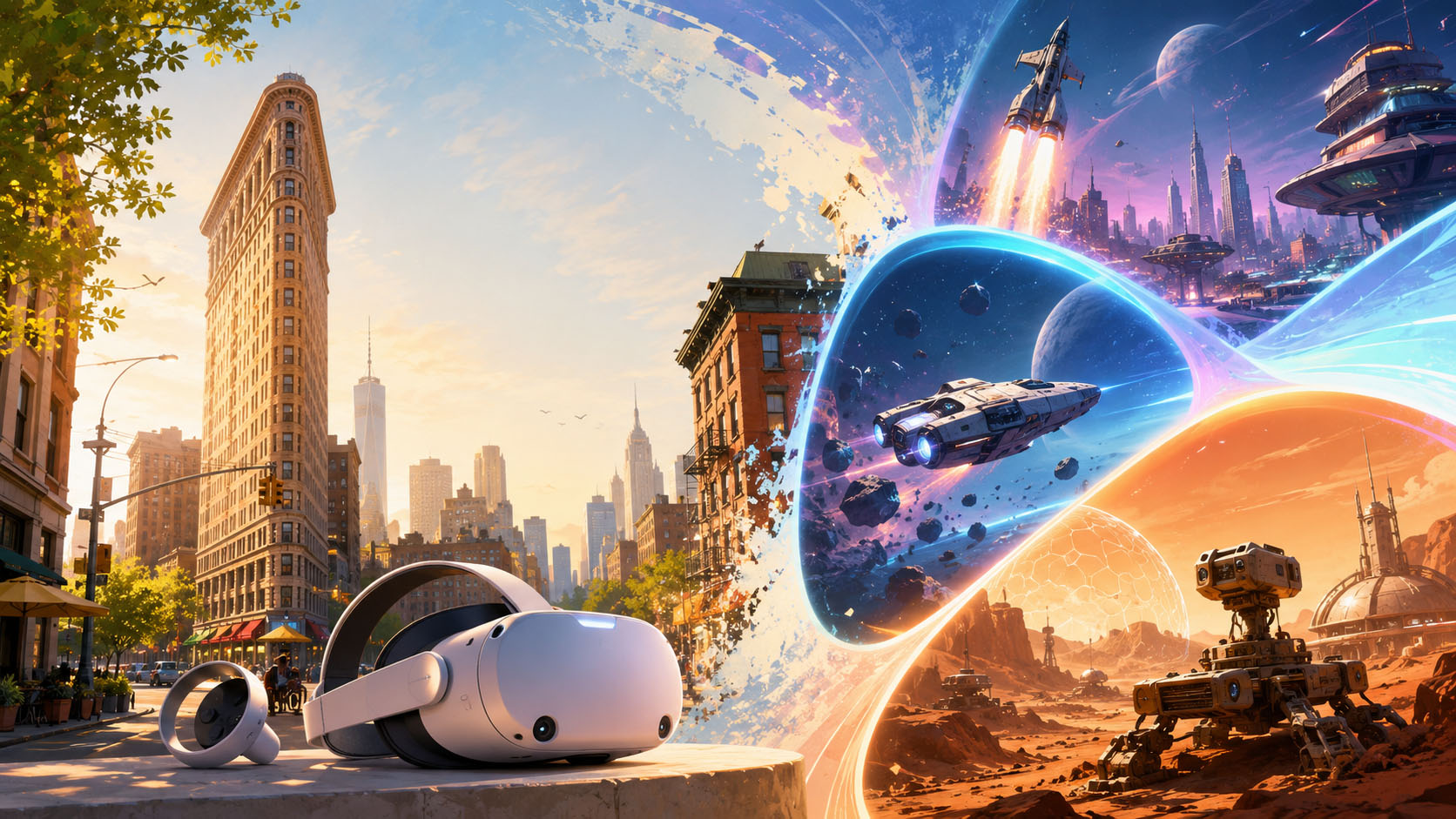
For an hour they get to be people they can't be anywhere else. The crew of a spaceship racing to fix the engines before it falls into a black hole. A defense squad on Mars, holding the line as wave after wave of ships come in. A team of survivors picking their way through an outbreak, deciding who they trust.
What makes it work isn't the worlds — it's that none of them can do it alone. The experiences are built so students have to rely on each other. Communicate. Think on their feet. Get creative when the plan falls apart. Trust the kid next to them to do their part.
The technical name for this is free-roam multiplayer VR. Free-roam means students can walk naturally with wireless headsets — no cables, no console, no joystick. Multiplayer means they see each other as characters inside the same experience, not as names on a screen.
But the real point is simpler: they go in as a group, become a team inside another world, and come out with a story they shared together.
And it looks incredible. Students come out of the headsets smiling, a little out of breath, and noticeably closer than when they walked in. That's the part program directors tell us about later — not the graphics, not the tech. The way the group felt different on the bus ride home.


Campers take thier team winning photos.
A Tidal Force visit is built to feel easy from the moment the group arrives. Informative, stuctured, and fun — all at the same time.
Take this case study as an example: Campers from a local Queens based STEM camp visited our facitlity for the day. The visit feels like one good afternoon in a place that looks like the future. Students come in, get introduced to the space and hear a quick intoduction to VR, the technology, how it works, and a safety briefing from the operators. Some campers teamed up with thier crew, other formed thier crew on the spot. Half step into their first experience while the other half settles into the lobby with some pizza. An hour later the champions of the first round emerge. The players come out bragging about their scores and laughing at the group photo, grab a slice, while the next group dives in. By the end, everyone has played, everyone has eaten, and the room is full of the smiles and laughter at the group photos and arguments about who really saved the ship.
That is the part students notice. What they may not notice is everything happening underneath: the problem-solving, the communication, the trust, the quick decisions, the creative thinking, and the way a group starts to feel more like a team after going through something together.
The whole thing ran for about two hours for a group of 36. We can also run shorter sessions minus the pizza but not the fun, for groups of 18 or less. Larger groups than 36 are also welcome, just give us a call to discuss logistics. We shape the schedule around your headcount before the visit, so the day feels organized and runs smoothly.
What makes it work isn't the worlds — it's that none of them can do it alone.
We have several experiences, and each one fits a different kind of group. Some directors like to curate the day in advance — picking the ones that fit their group best. Others hand the choice over to the campers and let them argue it out. Both work. You can choose ahead of time based on age, group size, and the kind of energy you want for the day — teamwork, competition, puzzles, action, or something more intense.
The short version:
Critical thinking and collaboration.
Your team has to repair a spaceship spiraling into a black hole before time runs out.
→// Space DefenseQuick thinking and communication.
Defend your base on Mars together as waves of enemies close in.
→// Asteroid SkirmishTeamwork and competition.
Split into teams and face each other in a tactical match across an asteroid field.
→// Room KPhysical ability and mental acuity.
An immersive adventure that asks the whole team for both — puzzles and action, all relying on each other.
→// ViRalTrust and coordination.
A zombie outbreak. If you can't rely on your team, you fail humanity and never find the cure.
→All five fit naturally alongside a STEAM-based curriculum. The skills they sharpen — problem-solving, communication, cooperation under pressure — are the same ones the classroom is reaching for. Students are just active, engaged, and laughing about it.
Will my students get motion sick?
We work hard to make VR feel comfortable, especially for students who may be trying it for the first time. Our experiences are built around natural movement, wireless headsets, simple controls, and trained operators who guide the group throughout the session.
Comfort is not a setting we tune at the end; it is part of how the experiences are built. Students are not just handed a headset and left to figure it out. They are welcomed in, guided through, and looked after the whole time. And if someone ever needs a break, that is completely okay — we take care of them and keep the group moving smoothly.
Is it safe?
The headsets are wireless, so there is nothing on the floor to trip over. An operator supervises every room. Equipment is wiped down between groups.
How large a group can you handle?
Most of our group bookings land between 18 and 32 students, but we can accommodate smaller and larger groups with . The more you bring, the more rotations we run, and the more total time your group spends in play.
// THE TIDAL FORCE EXPERIENCE
Experience the fun for groups of 18 or less
// SUMMER PIZZA PARTY EXAMPLE
Not limited to groups of 36
Somewhere this summer, a group of your students could be walking out of a headset smiling, a little out of breath, arguing about who really saved the ship. They'll tell that story on the bus, at dinner that night, and for weeks after.
A good summer trip gives students more than something to do for a few hours. It gives them a world to step into, a mission to take on, and a story to bring back with them. They come in as a group, become a crew inside the experience, and leave talking about what happened — the save, the score, the photo, the moment someone figured it out, or the thing everyone is still laughing about on the way home.
That is what we want a Tidal Force visit to feel like: exciting for students, easy for staff, and memorable after the headsets come off.
If that sounds like the kind of afternoon you want for your group, you know them better than we do. Whichever of these fits how you plan is the right next step:
// OPTION 01
Book a date directly.
About two minutes, confirmation right away.
PICK A DAY →
// OPTION 02
See the space and ask questions first.
Grab a 15-minute video call. We'll walk you through the rooms, talk through your group, and answer anything you want. No site visit, no follow-up unless you want one.
VIDEO CALL →
// OPTION 03
Write first.
Send us a note and we'll come back same-day.
SEND A NOTE →
July and August are open. The last two weeks of camp tend to be the first to fill — act soon!
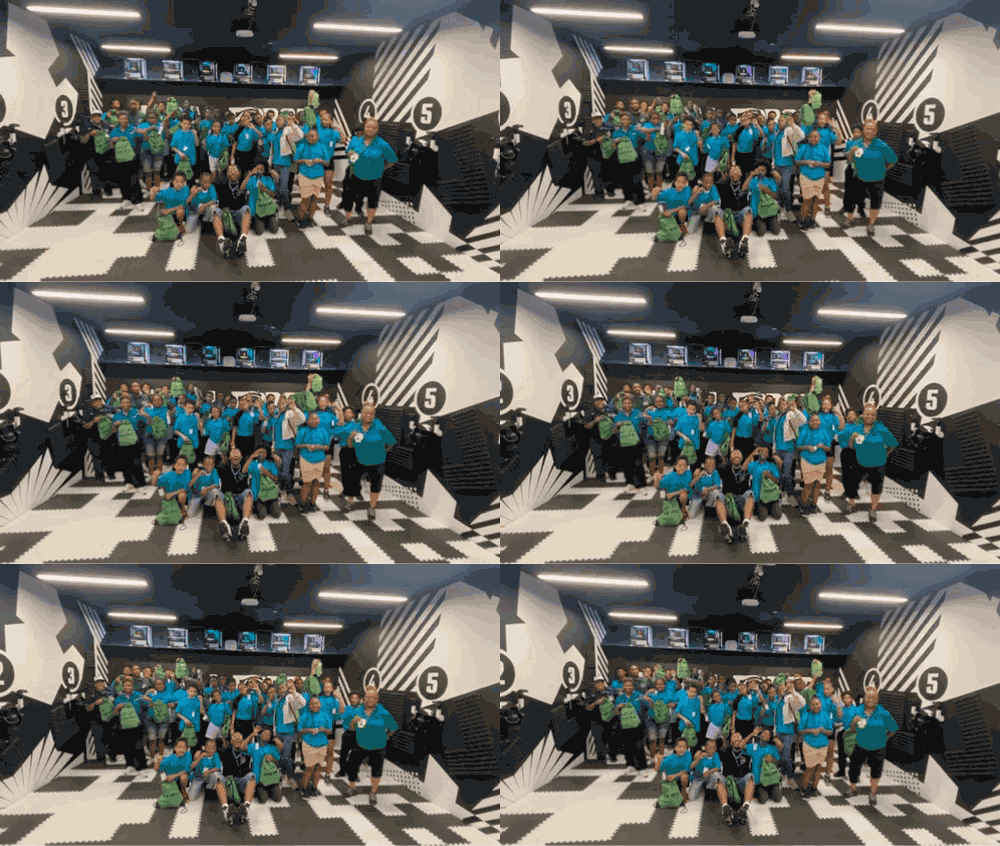
Campers group photo.